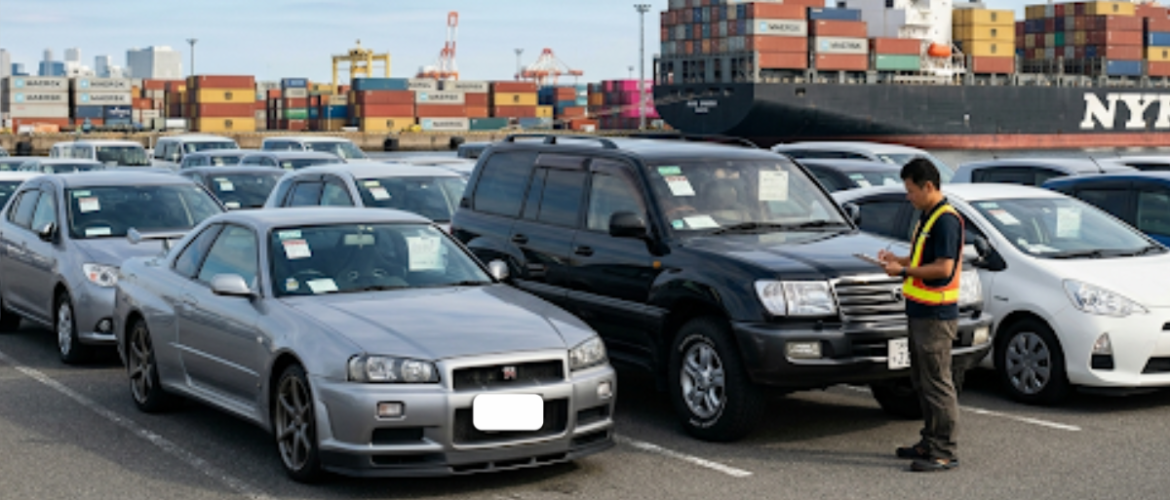
Buying a used car from Japan is an idea for an American buyer. It makes sense to consider Japan for cars. The cars from Japan are reliable. Many American buyers are choosing Japan for their used car needs. Japan has a lot of used cars. American buyers like the quality of these cars.
Why American Buyers Love Japan Car Exporters
US used car prices are still high. Japanese sellers trade in vehicles early, which floods Japan’s auction market with low-mileage, well-maintained cars at fair prices. For buyers, this means they can really save money and buy models that were never sold in the United States.
What Makes Japanese Used Cars So Appealing?
- Low mileage due to Japan’s short domestic ownership cycles
- Strict domestic inspections keep vehicles in top condition
- Access to rare models like the Toyota Land Cruiser and Nissan Skyline
- Prices significantly lower than the equivalent US inventory
How to Find a Reliable Japan Car Exporter
Step 1: Search Trusted Exporter Platforms
You should begin with websites like Be Forward, SBT Japan, and Goo-net Export. Be Forward SBT Japan, and Goo-net Export have a lot of information about car exporters in Japan. They show what other customers think of these exporters, how many cars they have sold, and what people like or dislike about them. This helps you find a used car exporter in Japan. Be Forward SBT Japan and Goo-net Export are very useful for people who want to buy a used car from Japan.
Step 2: Compare Exporters Side by Side
Look at these five things when comparing:
- Vehicle pricing vs. market average
- Shipping terms offered (FOB or CIF)
- Documentation transparency
- Customer review scores
- Response time to your inquiry
1. Check Exporter Reputation and Credentials
A trustworthy Japan car exporter will always have verifiable credentials. JUMVEA (Japan Used Motor Vehicle Exporters Association) is the main industry body. Members follow strict conduct rules. Non-members have no external accountability.
How to Verify an Exporter’s Reputation
- Search their name on Google Reviews and Trustpilot
- Check if they appear on JUMVEA’s official directory
- Look for consistent reviews across multiple platforms, not just their own site
- Read negative reviews carefully to see how complaints were handled
Years in business and monthly export volume are also strong trust signals. An exporter shipping 500 vehicles a month has a track record. A brand-new operation with no reviews does not.
2. Always Request the Auction Sheet
Every car sold at a Japanese auction comes with a detailed condition reports. To learn how to read these reports step-by-step, check our detailed auction sheet guide. It shows the vehicle’s grade, specific damage locations, interior condition, and odometer status. A legitimate exporter provides this document without hesitation.
Understanding Japan’s Auction Grading System.
For most buyers, Grade 4 and above is the sweet spot: clean cars with light use and no major surprises. Grades 3.5 and below start to carry cosmetic or mechanical baggage, and anything under 3 usually means someone else’s headache is now yours. Grade 5 is near showroom condition, while 4.5 sits just below that with minimal wear. One hard rule: if an exporter cannot produce the original auction sheet, walk away immediately.
3. Get an Independent Pre-Shipment Inspection
Never rely solely on the auction sheet. Arrange a third-party inspection through a company like JEVIC before the vehicle ships. This costs between $150 and $300 but protects you against hidden damage, odometer fraud, and structural issues that a quick auction inspection might miss.
What a Good Inspection Report Should Cover
- Frame and structural integrity
- Engine and transmission condition
- Flood damage indicators
- Brake system health
- Odometer verification
- US compliance considerations
This small fee is genuinely worth every dollar. Think of it as insurance you collect before anything goes wrong.
4. Verify All Export Documents
Document fraud is more common than most buyers expect. Always verify these four core documents for any Japan car export:
- Export Certificate issued by Japanese Customs
- Bill of Lading confirming the vehicle boarded the ship
- Commercial Invoice with vehicle details and sale price
- De-registration Certificate proving legal ownership transfer
Cross-check the Vehicle Identification Number (VIN) across every document. One digit off is a serious problem. Never finalize payment before all documents are verified.
5. Understand FOB vs CIF Shipping Terms
CIF puts more responsibility on the exporter. They handle freight and insurance all the way to your port, and you just take care of port fees and customs when it arrives. Fewer moving parts for you to manage.
FOB flips that. The exporter loads the goods at the Japan port, and everything after that freight, insurance, and the whole ocean journey is on you to arrange.
If you’re importing from Japan for the first time, CIF is the easier starting point. You’ll pay a bit more, but you’re not scrambling to find a freight forwarder and marine insurance on your own. Once you know the ropes, FOB can save you money.
6. Use Safe Payment Methods
Never send 100% payment upfront. Structure your payments like this:
- Deposit (20 to 30%) paid after vehicle confirmation
- Balance is paid only after inspection passes and documents are verified
For purchases over $5,000, it is a good idea to use an escrow service. An escrow service holds your money until both the buyer and seller meet the conditions they agreed on. This way, the escrow service makes sure both sides are happy with the deal before it is final. The escrow service acts as a third party to ensure a smooth transaction. When both sides are satisfied, the escrow service releases the money. Using an escrow service can give you peace of mind when making purchases. It helps prevent scams and ensures that you get what you paid for. An escrow service is especially useful for transactions. It provides a way to make payments. The escrow service will only release the payment when all conditions are met. This protects both the buyer and the seller. An escrow service makes sure that the transaction is fair for both sides.
7. Test After-Sales Support Before You Buy
Send a technical question before you commit to buying. A good Japan car dealer gives prompt answers.
After-sales support is very important when something goes wrong.
For example, it could be shipping damage or missing documents.
Here are some questions to ask your exporter before buying:
What is the overall condition of the vehicle?
Can you share detailed photos and inspection videos?
Additionally, what does the official vehicle history report show?
Furthermore, do you provide any warranty or guarantee for buyers?
Moreover, which shipping method will you use for transport?
Finally, what exact customs documents do I need to receive?
Questions to Ask Your Exporter Before Buying
- What happens if the car arrives with undisclosed damage?
- Can you provide replacement documents if customs requires them?
- How do you handle disputes after shipment?
Their answers reveal everything about how they will treat you after your money is gone.
8. Work with a Licensed US Customs Broker
So you have a customs broker who takes care of the United States side of your import. The licensed customs broker does all the paperwork with the United States Customs and Border Protection, which is also known as the CBP. They also figure out the duties that you have to pay.. The licensed customs broker makes sure that your vehicle is okay with the Environmental Protection Agency, which is also known as the EPA, and the Department of Transportation, which is also known as the DOT.
Key US Import Requirements to Know
If you have a car that’s 25 years or older, it does not have to meet the Federal Motor Vehicle Safety Standards.
- Vehicles that are over 21 years old do not have to follow the rules about the things they put into the air that the Environmental Protection Agency makes.
- When you bring a car into the country, you will probably need to fill out the EPA Form 3520-1 and the DOT Form HS-7.
- The rule that says cars have to be 25 years old now includes cars that were made in the year 2000 or before.
- You can find someone to help you with this process by looking at the list of brokers from the National Customs Brokers and Forwarders Association of America.
Find a broker through the National Customs Brokers and Forwarders Association of America (NCBFAA).
9. Red Flags to Watch Out For
Knowing how to choose a reliable Japan car exporter also means knowing when to walk away fast.
Watch out for these warning signs:
- Prices are 25 to 40% below the market average
- Refusal to provide the original auction sheet
- Pressure to pay in full before inspection
- Vague or evasive answers about vehicle history
- No JUMVEA membership or verifiable credentials
Poor communication or inconsistent responses can be a flag. If something feels off, trust your instincts. Legitimate exporters do not pressure buyers. Hide documentation from them.
10. The 25-Year Rule: Big News for US Enthusiasts
The 25-year import rule opens doors for American car lovers. For a full breakdown on eligible dates and paperwork, read our complete 25-year import rule guide. Starting in 2025, cars made in 2000 and before can be brought into the country without any changes. The twenty-five-year import rule is news for American car lovers. This means we can now import cool cars, like the Nissan Skyline GT-R R34, Toyota Land Cruiser 80 Series, and Honda NSX.
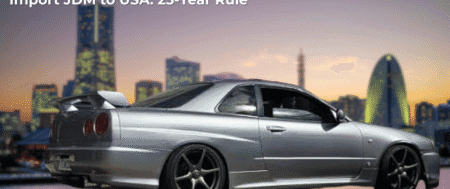
The Nissan Skyline GT-R R34 is a car. The Nissan Skyline GT-R R34 was made from 1999 to 2002. Now the Nissan Skyline GT-R R34 is old enough to be imported without any problems.
Prices are rising fast. Buyers who move now secure these vehicles before demand pushes values even higher.
Latest Trends in Japan Car Exports (2025 to 2026)
The Japanese used car export market is evolving quickly. Here is what US buyers should know right now:
- Hybrid vehicles like the Toyota Aqua and RAV4 Hybrid are in high global demand
- The supply of late-model hybrids is increasing due to Japan’s domestic incentive programs.
- The Toyota GR86 and the Toyota Land Cruiser 300 Series are showing up in export listings.
- People really want the Suzuki Jimny, so it is still selling for as much as a new one.
- If you want a model, you should buy it now because the Toyota GR86 and other hybrid models are going up in price all the time.
Conclusion
Buying from The Japan Cars comes down to one thing: trust. Get that right, and the rest of the process takes care of itself.
Start by verifying that TheJapanCars is a legitimate exporter. Ask for the auction sheet on any car you’re considering. It tells you the vehicle’s condition grade, mileage history, and any damage, straight from the auction house, no filter. Then get an independent inspection done. A second set of eyes before money changes hands is always worth it.
Speaking of money, pay through a safe, traceable method. Wire transfers to verified business accounts are standard in this industry. If something about the payment setup feels off, trust that feeling.
A licensed US customs broker is worth bringing in early. They handle the paperwork on the American side so you’re not figuring out compliance and import duties as you go.
Watch for red flags. If TheJapanCars, or anyone else, is pushing you to decide fast, dodging document requests, or quoting prices that seem too good to be real, slow down. Legitimate exporters don’t need to pressure you.
The right partner answers your questions straight, shows their work, and has a track record you can actually verify.
Do it properly, and your car arrives exactly as described, on time, worth every dollar.